
 Akash Kumar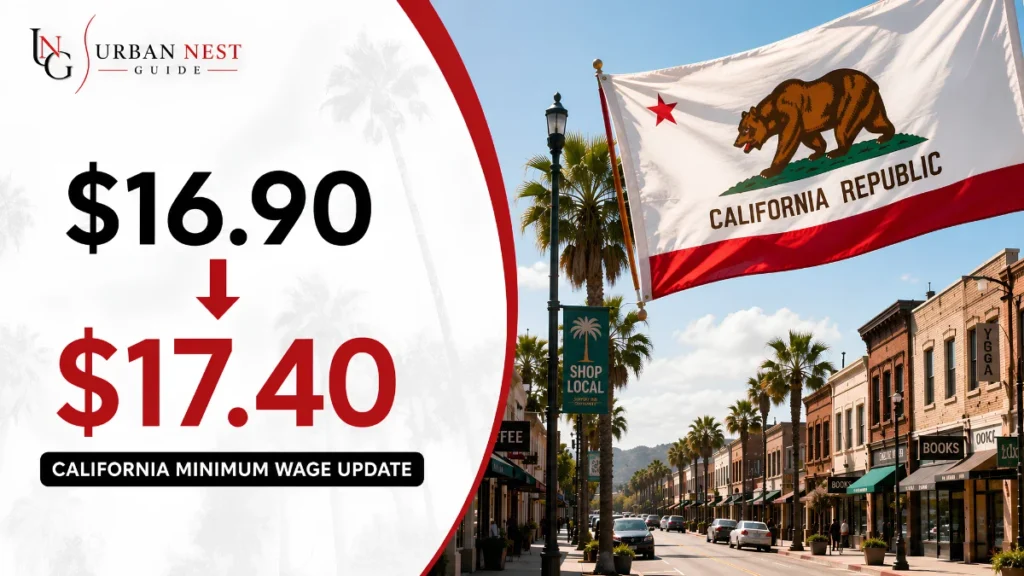
If you work in California, or you run a small business here, your math for 2027 just changed. On August 1, 2026, Governor Gavin Newsom confirmed that the statewide minimum wage will climb to $17.40 an hour starting January 1, 2027. That is up from the current $16.90, and it will be the highest statewide minimum wage in the entire country.
Fifty cents may not sound like a headline. Stretch it across a full work year, though, and it turns into real money in your pocket; it also raises real questions if you sign the paychecks. Let’s break down exactly what is changing, why it is happening, and what you can actually do with the extra income.
Key Takeaways
- The new rate: California’s minimum wage rises to $17.40 per hour on January 1, 2027, up from $16.90.
- Who decided it: Governor Newsom announced it on August 1, 2026; the increase is automatic and tied to inflation.
- What you gain: a full-time worker earns roughly $20 more per week, about $1,040 more per year before taxes.
- The catch: some cities already pay more, and some economists warn about higher prices or fewer hours.
- Smart move: treat the raise like a plan, not a surprise; even half of it can rebuild your savings.
What Exactly Is Changing in 2027?
Here is the short version: every employer in California, regardless of size, will need to pay at least $17.40 per hour beginning January 1, 2027. The current floor is $16.90, so the jump is 50 cents, or a little under 3 percent.
That figure is not random. California law caps the annual minimum wage adjustment at 3.5 percent, and it ties the increase to the federal Consumer Price Index (a standard measure of inflation). Each year, the state’s finance director calculates the new number on or before August 1; that is why the announcement landed when it did.
For the official, always current rate, bookmark the California Department of Industrial Relations minimum wage page. It is the primary source, and it beats relying on secondhand blog numbers.
How Much More Money Is That, Really?
Let’s do the honest math, because the weekly number tells a truer story than the hourly one.
| Time worked | Extra at +$0.50/hr | Roughly |
| Per hour | $0.50 | pocket change on its own |
| Per 40-hour week | $20.00 | a tank of gas or a phone bill dent |
| Per month (full time) | about $86 | a utility bill |
| Per year (full time) | about $1,040 | a solid emergency fund boost |
So a full-time minimum-wage worker in California could take home roughly $1,040 more in 2027 than at today’s rate, before taxes. That assumes your hours stay the same, which is the part worth watching; more on that below.
Why Is California Raising It Again?
Two words: living costs. Housing, groceries, insurance and childcare have all climbed, and the state’s system is designed to nudge wages upward each year so paychecks do not fall behind inflation. The current framework goes back to 2016, when a plan was signed to lift the wage to $15, then adjust it every year based on inflation.
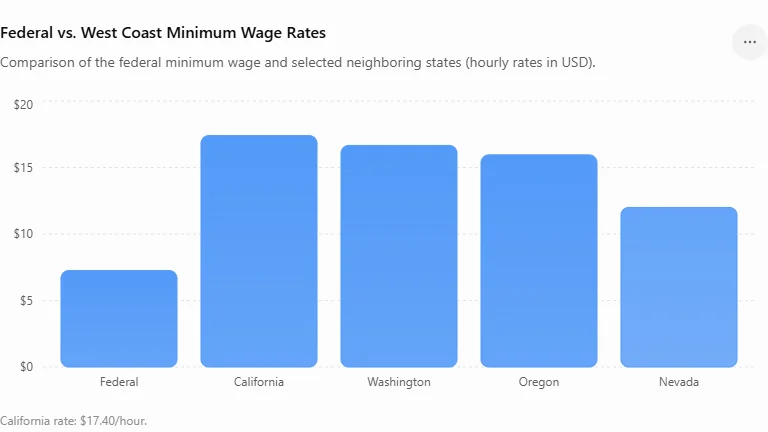
The gap is easier to feel when you compare it to the federal floor. The national minimum wage has been stuck at $7.25 since 2009. According to the U.S. Bureau of Labor Statistics inflation calculator, that 2009 dollar buys far less today, which is exactly why 30 states plus Washington, D.C. now set their own higher rates.
California Still Sits at the Top of the National List
At $17.40, California will edge out Washington State, which currently leads the states at $17.13. Only Washington, D.C. sits higher, at $18.40. Here is how a few of the highest floors stack up as of the latest updates:
| Place | Minimum wage | Note |
| Washington, D.C. | $18.40 | Highest in the country (a district, not a state) |
| California (2027) | $17.40 | Highest statewide rate |
| Washington State | $17.13 | Previous statewide leader |
| New York City area | $17.00 | NYC, Long Island, Westchester |
| Federal floor | $7.25 | Unchanged since 2009 |
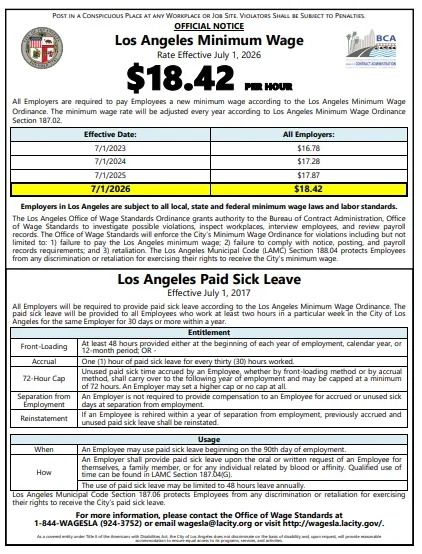
One more wrinkle that trips people up: some California cities and industries pay more than the state figure. Cities such as Los Angeles and San Diego run their own higher local wages, and the state already requires $20 an hour for fast-food workers at large chains, plus a higher floor for many healthcare workers. Always check your city’s rate, not just the state number.
The Other Side: What Critics Are Saying
An honest post covers both views, and readers trust you more for it. Supporters call the raise economic fairness, arguing that nobody working full time should struggle to cover rent. Critics, including some small-business groups, warn that higher labor costs can lead to reduced hours, slower hiring, or higher prices at the register.
The truth for most workers sits in the middle: the extra pay helps, but it only helps if your hours hold steady and prices do not rise faster than your wage. That is not a reason to ignore the raise; it is a reason to plan around it, which is where you come in.
What This Means for Your Budget (The Part That Matters)
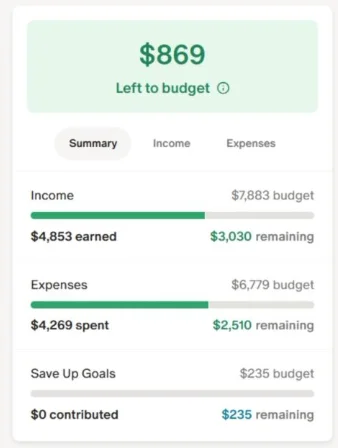
A raise is only as good as what you do with it. If the extra $86 a month quietly disappears into everyday spending, you will not feel a thing by March. If you give it a job, it can genuinely move your finances forward.
A simple way to handle any raise is to run it through a budget framework first. If you have not set one up yet, start with our guide to the 50/30/20 budget rule; it splits your income into needs, wants and savings so a pay bump does not just evaporate.
Here are three practical moves for the extra income:
- Top up your emergency fund: that first bill life throws at you. Even sending half of your raise here builds a cushion fast.
- Start or grow investments: compounding is quietly powerful, and starting small still counts.
- Attack high-interest debt: if a card balance is charging you 20 percent or more, that is a guaranteed return you cannot beat elsewhere.
Not sure where an emergency fund even fits? We walk through it step by step in how to build an emergency fund, and if the whole topic of managing money feels new, start with what personal finance actually means.
A Quick Word for Small Business Owners
If you employ minimum-wage staff, 2027 is a planning year, not a panic year. Map the new labor cost now, review your pricing, and look at scheduling before January arrives. Some owners phase in small price adjustments early rather than one sharp jump; others lean into training so each hour worked delivers more value. The businesses that struggle are usually the ones that get surprised, not the ones that plan.
FAQs
Q1. What is California’s minimum wage in 2027?
California’s statewide minimum wage will be $17.40 per hour starting January 1, 2027, up from $16.90 in 2026. It is the highest statewide minimum wage in the United States.
Q2. How much more will I earn with the 2027 increase?
At the new $17.40 rate, a full-time worker earns about $20 more per week, roughly $86 more per month, or about $1,040 more per year before taxes, assuming a 40-hour week and steady hours.
Q3. Which US place has the highest minimum wage?
Washington, D.C. has the highest at $18.40 per hour. Among states, California leads at $17.40 for 2027, just ahead of Washington State at $17.13.
Q4. Why does California raise its minimum wage every year?
State law ties the minimum wage to inflation, using the Consumer Price Index, and caps the yearly increase at 3.5 percent. The goal is to help paychecks keep pace with rising living costs.
Q5. Do all California workers get exactly $17.40?
No. That is the statewide floor. Some cities such as Los Angeles and San Diego set higher local rates, and fast-food workers at large chains and many healthcare workers already earn more. Always check your city and industry.
| Sources and further reading: |
- California Department of Industrial Relations (official state minimum wage information)
- Los Angeles Times: Newsom announces the 2027 increase
- U.S. Bureau of Labor Statistics inflation calculator
Disclaimer: This article is for general education, not financial or legal advice. Wage rules change and vary by city and industry; confirm your rate with official state or city sources.
About The Author