
 Akash Kumar
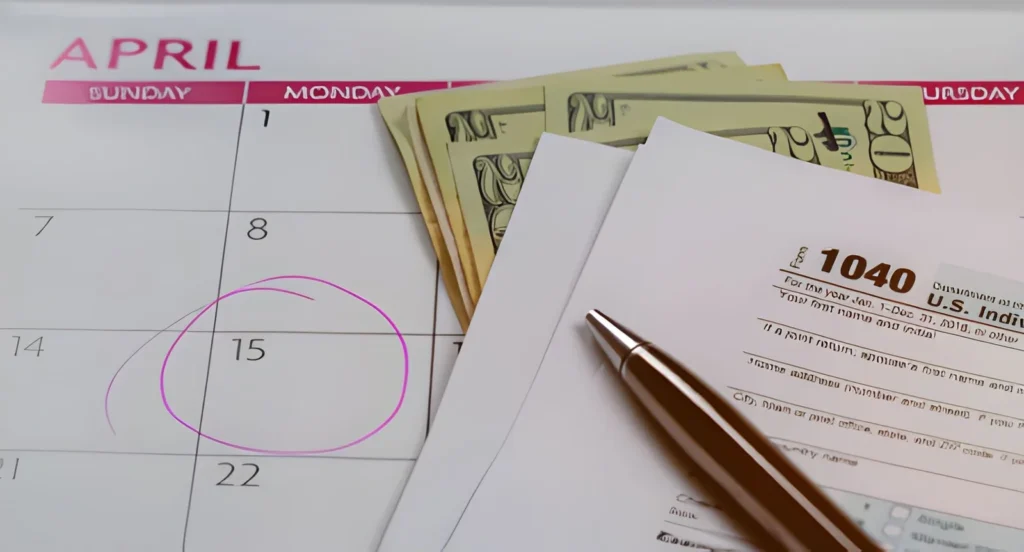
A biweekly budget gives every paycheck a job before the next payday arrive
To budget biweekly paychecks, build a separate plan for each check. Assign every bill to the paycheck that arrives before its due date, reserve two weeks of groceries and transportation, save a fixed amount per payday, and decide how to use three-paycheck months before the money arrives.
Why a biweekly budget feels harder than a monthly budget
Rent is monthly. The phone bill is monthly. Insurance is monthly.
Your paycheck arrives every other Friday.
That timing mismatch is the entire problem.
A normal monthly budget can show that you earn enough for the month while your checking account still runs short on the 9th. The total is fine. The sequence is not.
A biweekly budget fixes the sequence. Instead of asking, “Can this month’s income cover this month’s expenses?” you ask a smaller and more useful question:
What must this paycheck do before the next paycheck arrives?
That question creates a 14-day plan. Bills get assigned by due date. Groceries and gas get a two-week cap. Money for next month’s rent stops looking like spending money.
Key Takeaways
- Biweekly pay usually creates 26 paychecks per year, not 24.
- Most months have two checks; two months usually have three checks in a 26-paycheck year.
- Build the normal budget around two checks, not the annual monthly average.
- Assign each bill to the paycheck that arrives before its due date.
- Divide annual expenses by 26 to create a per-paycheck sinking-fund amount.
- Use a 14-day spending cap for groceries, gas, and flexible purchases.
- Give the third paycheck a job before payday.
- Biweekly pay and semimonthly pay are not the same.
Biweekly pay vs semimonthly pay: understand 26 paychecks first
People often say “twice a month” when they mean biweekly. The schedules are different.
| Pay schedule | Typical pay pattern | Paychecks per year | Main budgeting issue |
|---|---|---|---|
| Biweekly pay | Every 14 days, often the same weekday | Usually 26 | Pay dates move through the month and create three-paycheck months |
| Semimonthly pay | Two set dates, such as the 1st and 15th | 24 | Paydays stay predictable but one check may carry more bills |
| Weekly pay | Same weekday each week | Usually 52 | Monthly bills must be divided across four or five checks |
| Monthly pay | Once each month | 12 | One deposit must last the entire month |
Biweekly math is straightforward:
52 weeks ÷ 2 = 26 paychecks
If take-home pay is $1,850 every two weeks:
- Normal two-check month: $3,700
- Annual take-home pay: $48,100
- Mathematical monthly average: about $4,008
Here is the trap: ten months may still bring only $3,700. If normal bills are built around the $4,008 average, those ten months can be short.
Use the two-check amount as the normal monthly base. Treat the third checks as planned surplus unless your actual calendar or payroll arrangement requires them for ordinary expenses.
Three-paycheck months in a biweekly pay schedule
In a typical 26-paycheck year, two calendar months contain three paydays. The exact months depend on the first payday and the weekday on which payroll lands.
Do not copy a generic calendar. Open your phone calendar, add the next payday, repeat it every two weeks, and scan the next 12 months. Mark every month with three deposits.
Occasionally a calendar year or payroll schedule can produce 27 paydays. Verify the employer’s payroll calendar before building a plan around an extra check.
Extra paycheck budget rule for three-paycheck months
A third check is not free money. It is normal earned income landing in a month where the first two checks may already cover the baseline budget.
That makes it useful for:
- Building a checking buffer
- Getting one month ahead on bills
- Funding annual expenses
- Paying down high-interest debt
- Replenishing emergency savings
- Making a planned retirement contribution
- Covering one intentional purchase
Choose the order before the month begins.
How to budget biweekly paychecks with a paycheck calendar
The Consumer Financial Protection Bureau’s bill-calendar tool recommends listing bills, payment dates, and income dates together. That is especially useful when paydays move across the calendar.
Step 1: Start the biweekly budget with take-home pay
Use the amount that reaches checking after taxes, health insurance, retirement contributions, and other deductions.
If checks change because of hourly work, tips, overtime, or commissions, use the lowest normal check from the last several pay periods. Treat the amount above that baseline as extra after it arrives.
Net paycheck amount: use money you can actually spend
Gross pay may be $2,400 while take-home pay is $1,850. A budget based on gross pay is short before it begins.
Write down:
- Normal net paycheck
- Lowest normal paycheck
- Next six payday dates
- Deductions that may change on a third check
Some employers take benefit premiums from only the first two checks of a month. That can make a third check slightly different. Review actual pay stubs.
Step 2: Build a bill calendar with due dates and autopay dates
List every fixed and semi-fixed obligation:
- Rent or mortgage
- Utilities
- Phone and internet
- Insurance
- Childcare
- Car payment
- Student loans
- Credit-card minimums
- Medical payment plans
- Subscriptions
- Court-ordered or family obligations
Add the actual date money leaves the account, not only the printed due date. An autopay may draft earlier.
Bill due dates: assign the payment date, not the statement date
For an online payment, allow processing time. The CFPB bill-calendar tool suggests marking an online payment several days before the due date and adding income dates to the same calendar.
A bill belongs to the paycheck that can fund it safely before payment must be sent.
Step 3: Split monthly bills between biweekly paychecks
There are three useful methods.
| Biweekly bill-splitting method | How it works | Best for |
|---|---|---|
| Due-date method | Each paycheck covers bills due before the next payday | Beginners and tight cash flow |
| Half-payment method | Half of large monthly bills is reserved from each regular check | Rent, mortgage, insurance, and large fixed bills |
| Bills-account method | Each check transfers a set amount into a separate bills checking account | People who want spending and bills separated |
The due-date method is easiest to start. The half-payment method becomes useful when the first check is overloaded.
Half-payment method for rent and large monthly bills
If rent is $1,400, reserve $700 from each regular paycheck. The money from the second check may sit until next month’s rent is due.
This feels strange at first because money is waiting in the account. Give it a named category so it does not look available.
Step 4: Create a 14-day spending plan for groceries and gas
Monthly flexible categories need to become two-week limits.
Use this formula:
14-day spending money = paycheck – bills before next payday – savings – debt plan – future bill reserves
If a $1,850 check must cover $1,050 of bills and reserves, $125 of savings, and $125 of extra debt:
$1,850 – $1,050 – $125 – $125 = $550 for 14 days
That $550 may cover groceries, gas, household supplies, and personal spending until the next check.
Weekly spending cap from a biweekly paycheck
Divide the 14-day amount by two for a weekly guide:
$550 ÷ 2 = $275 per week
The weekly number is not a new pool of money. It is a pacing tool. Spending $400 in week one leaves $150 for week two.
Step 5: Save from every paycheck with a biweekly savings plan
Saving “at the end of the month” often fails because the money has already been absorbed by small purchases.
Choose a per-check amount for:
- Emergency savings
- Retirement outside payroll
- Car maintenance
- Annual insurance
- Gifts and holidays
- Home or pet costs
- A future purchase
Urban Nest Guide’s planned sinking fund vs emergency fund guide explains which expenses belong in each category.
Annual expense divided by 26 paychecks
For a $1,300 annual insurance cost:
$1,300 ÷ 26 = $50 per paycheck
For $780 of holiday spending:
$780 ÷ 26 = $30 per paycheck
This method matches the savings contribution to the pay schedule.
Step 6: Balance uneven pay periods before the next payday
One paycheck may carry rent while the other carries smaller bills. If the first plan leaves $40 and the second leaves $600, do not treat the $600 as free spending.
Move part of the second check forward to support the next heavy period.
You can also ask a biller to move a due date. The CFPB’s due-date worksheet recommends mapping income and bills first, then asking whether a different date is available. Not every biller allows a change, and the first bill after a change can be unusual.
Change bill due dates to match a biweekly pay schedule
Ask these questions before moving a date:
- When will the new date begin?
- Will the first adjusted bill be larger?
- Is there a fee?
- Does interest continue during a longer first cycle?
- Will autopay update automatically?
Get the answer in writing or save the confirmation.
Biweekly budget example with two $1,850 paychecks
Assume take-home pay is $1,850 every other Friday. The normal two-check budget is $3,700.
| Category | Monthly target | Paycheck 1 | Paycheck 2 |
|---|---|---|---|
| Rent | $1,400 | $700 | $700 |
| Utilities | $250 | $125 | $125 |
| Car insurance | $180 | $90 | $90 |
| Phone and internet | $120 | $60 | $60 |
| Minimum debt payments | $250 | $125 | $125 |
| Groceries | $600 | $300 | $300 |
| Gas and transportation | $250 | $125 | $125 |
| Emergency savings | $250 | $125 | $125 |
| Sinking funds | $200 | $100 | $100 |
| Personal spending | $200 | $100 | $100 |
| Total | $3,700 | $1,850 | $1,850 |
The example is unusually even because it uses the half-payment method. Real due-date budgets will often be uneven.
Paycheck 1 budget with first-half bills
If the actual first check must pay rent, utilities, and groceries, it may look heavier. Reserve money from the previous check so the full rent does not depend on one deposit.
Paycheck 1 checklist for a 14-day spending plan
- Bills due before Paycheck 2
- Half of next rent or mortgage
- Two weeks of groceries and transportation
- Minimum debt obligations
- Savings transfer
- Sinking-fund transfer
- Small checking buffer
Paycheck 2 budget with next-month bill reserves
The second check often arrives near the end of the month. It may need to fund rent due on the 1st of the next month.
Paycheck 2 checklist for next month’s rent
Do not ask, “What bills remain this month?” Ask, “What must this money handle before the next payday?”
That may include next month’s rent, insurance, and a credit-card payment due early in the following month.
Three paycheck month plan for an extra biweekly paycheck
Suppose the third check is $1,850 and the normal budget is already funded.
One possible plan is:
| Extra paycheck goal | Amount |
|---|---|
| Emergency fund | $750 |
| High-interest debt | $500 |
| Annual expenses | $300 |
| Planned personal spending | $200 |
| Checking buffer | $100 |
| Total | $1,850 |
This is an illustration, not a required formula.
Extra paycheck priorities for debt, savings, and annual bills
A practical order is:
- Catch up essential bills.
- Restore the checking buffer.
- Refill emergency savings used recently.
- Fund near-term annual costs.
- Pay expensive debt.
- Fund longer-term goals.
- Keep a reasonable amount for enjoyment if the plan allows it.
Three paycheck month mistake: increasing monthly lifestyle
A third check can support a one-time goal. It should not automatically create a recurring payment that must be supported in two-check months.
Biweekly budget template to copy for every paycheck
| Biweekly budget line | Planned amount | Actual amount |
|---|---|---|
| Net paycheck | ||
| Bills due before next payday | ||
| Future bill reserve | ||
| Groceries for 14 days | ||
| Transportation for 14 days | ||
| Minimum debt payments | ||
| Extra debt payment | ||
| Emergency savings | ||
| Sinking funds | ||
| Personal spending | ||
| Checking buffer | ||
| Money left unassigned |
The final line should have a job. “Unassigned” money has a habit of becoming invisible spending.
How to budget biweekly paychecks with variable hours
Use a conservative paycheck amount rather than an average inflated by overtime.
Variable biweekly income: choose a conservative baseline
Review the last six to 12 checks. Separate:
- Guaranteed base hours
- Overtime
- Tips
- Bonuses
- Commission
- Reimbursements
Build required expenses around base income. Allocate extra only after it reaches the account.
Overtime and commission rule for a paid-every-two-weeks budget
A simple order for extra income is:
- Taxes, if not fully withheld
- Essential bills
- Buffer restoration
- Annual expenses
- Debt or savings goal
- Optional spending
Do not increase the baseline after one strong check.
Common biweekly budget mistakes to avoid
Mistake 1: Using monthly average income in a two-paycheck month
The annual average includes third checks. Ten months may not receive that amount.
Mistake 2: Forgetting bills due before the first paycheck
Rent due on the 1st may need money from the previous month’s final check.
Mistake 3: Dividing every monthly bill by two without protecting the reserve
The half-payment method works only when the reserved half stays untouched.
Mistake 4: Treating a third paycheck as a shopping bonus
Pre-assign it to the most useful goal.
Mistake 5: Saving only when money is left over
Use a per-paycheck transfer, even if the starting amount is small.
Mistake 6: Ignoring annual expenses in the paycheck budget
Divide yearly costs by 26 and build sinking funds.
Mistake 7: Making a perfect plan and never checking actual spending
Review the budget for ten minutes before every payday.
Biweekly budget FAQs about paychecks, bills, and savings
Is biweekly pay the same as twice-monthly pay?
No. Biweekly usually means every 14 days and normally produces 26 checks per year. Semimonthly means two set paydays per month and produces 24 checks.
How do I split bills between biweekly paychecks?
Assign each bill to the paycheck arriving before its payment date, or reserve half of large monthly bills from each regular check.
How much should I save from each biweekly paycheck?
Choose an amount based on the budget and goals. For an annual target, divide the amount by 26 to create a per-paycheck contribution.
What is a 14-day spending plan?
It is the amount available for groceries, gas, household purchases, and flexible spending after bills, savings, debt, and future reserves are removed from the current paycheck.
Which months have three paychecks?
The months depend on the first payday and payroll weekday. Add a repeating 14-day payday event to a calendar and mark months containing three deposits.
What should I do with an extra biweekly paycheck?
Use it intentionally for a buffer, annual bills, emergency savings, high-interest debt, investing, or a planned purchase. Do not create a recurring bill that two-check months cannot support.
Does the 50/30/20 rule work with biweekly pay?
It can be applied to each paycheck, but actual needs may not fit the percentages. Use the rule as a reference rather than forcing essential bills into an unrealistic limit.
How do I budget rent when paid every two weeks?
Reserve half the rent from each regular check or use part of the previous month’s final paycheck so rent is fully funded before the 1st.
Can I change bill due dates to match biweekly paydays?
Some billers allow changes. Ask about the effective date, first adjusted payment, fees, interest, and autopay treatment before confirming.
What if one biweekly paycheck is smaller?
Build the required budget around the lowest normal check. Treat overtime, tips, and commissions above that amount as extra only after they arrive.
Disclaimer: This article is for general educational purposes and is not individualized financial, tax, legal, employment, or debt advice.
About The Author