
 Akash Kumar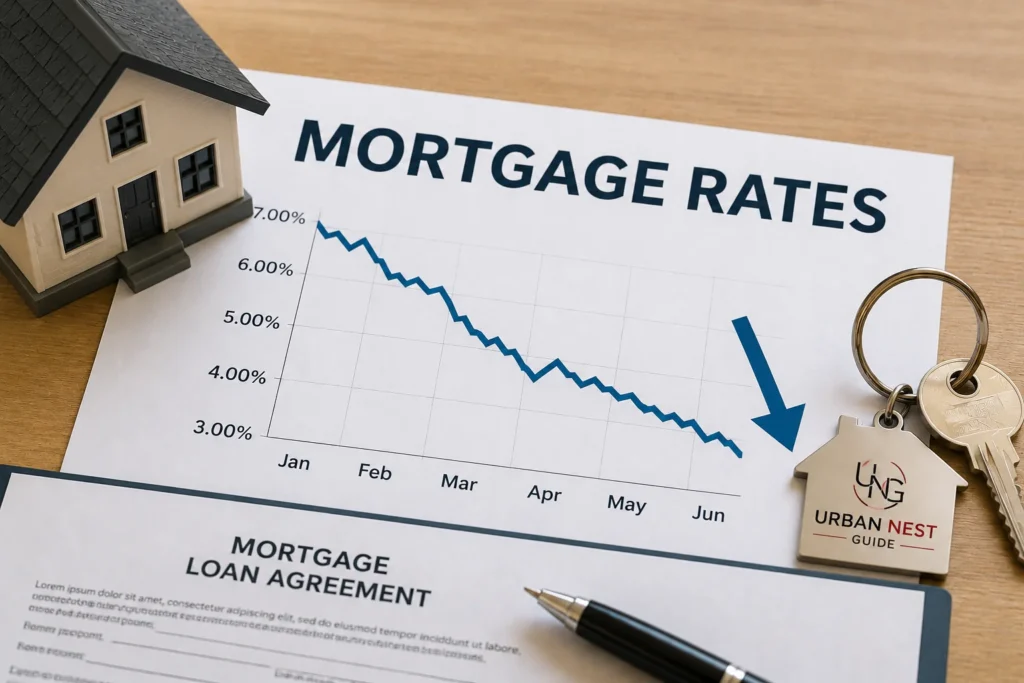
If you have a mortgage, want one, or you are just trying to make your savings work harder, this week brought news worth understanding.
Mortgage rates just dropped for the first time in six weeks, and the Federal Reserve is widely expected to keep its main interest rate on hold. Two small moves, but they touch almost everything: your home loan, your savings, your credit cards, and even your car payment.
Let us walk through what actually happened and, more importantly, what you can do about it.
Quick Summary
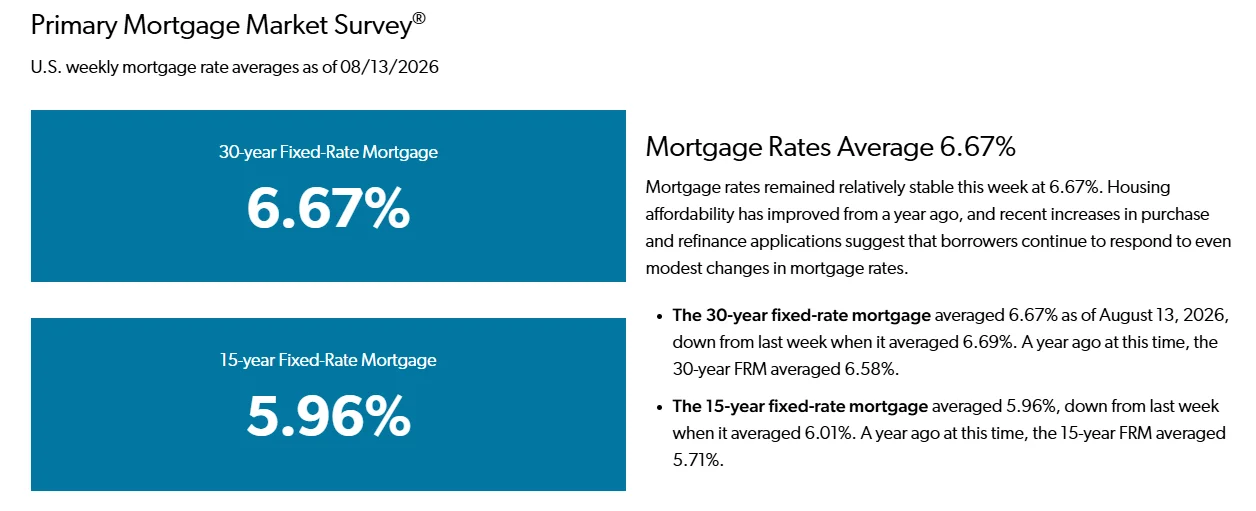
- Mortgage rates fell: the average 30 year fixed rate slipped to about 6.58%, ending a six week climb.
- The Fed is holding: weak jobs data and cooling inflation mean the Federal Reserve is likely to leave its rate unchanged.
- Savers still win for now: top high yield savings accounts still pay around 3.75% to 4.15%, far above the national average.
- Refinancing is heating up: refinance applications are up more than 62% from a year ago as rates ease.
- Your move: lock in savings rates while they are high, and check if refinancing math works for you.
What Just Happened With the Fed and Mortgage Rates?
Let us start with the basics, because this trips up a lot of people.
The Federal Reserve, often just called the Fed, is like the referee of the US economy. One of its main tools is the federal funds rate, which is the interest rate banks charge each other to borrow money overnight.
When the Fed raises that rate, borrowing gets more expensive across the board. When it lowers or holds the rate, borrowing costs tend to ease.
Here is the key thing many people get wrong: the Fed does not directly set your mortgage rate. Instead, mortgage rates mostly follow the 10 year Treasury yield, which moves based on what investors expect for the economy and inflation. So mortgage rates can drop even when the Fed does nothing at all, which is exactly what happened this week.
This week, softer job numbers and signs of cooling inflation lowered the odds of any rate hike, and mortgage rates responded by dipping to around 6.58%.
You can always check the official direction of policy on the Federal Reserve website, and track weekly mortgage averages through Freddie Mac’s rate survey. Bookmarking primary sources like these is a smart habit; it keeps you ahead of clickbait headlines.
How the Fed’s Decision Touches Your Everyday Money
You might be thinking, I am not buying a house right now, so why should I care?
Fair question. The truth is that the Fed’s rate ripples into almost every corner of your budget. Here is the plain breakdown.
| Part of your money | When rates fall or hold | What it means for you |
| Savings accounts | Yields slowly drift down | Lock in high rates now while they last |
| Mortgages | Rates ease gradually | Refinancing may start to make sense |
| Credit cards | Relief is slow and small | Do not wait on the Fed; pay down debt |
| Auto loans | Barely moves short term | Shop around and compare offers |
| CDs | Rates edge lower over time | Consider locking a rate before cuts |
Notice the pattern: the effect is real but gradual, and it is different for savers versus borrowers.
That is why a single Fed meeting should never send you into a panic. As one senior economist put it recently, act cautiously and responsibly, and do not make rash decisions based on one report.
Good News for Savers (But Do Not Wait Too Long)
Right now is still a genuinely good moment to be a saver, and that will not last forever.
Top online banks are paying around 3.75% to 4.15% on high yield savings accounts, while the national average for a regular savings account sits near a sleepy 0.61%. That gap is enormous, and it is basically free money for doing one simple thing: moving your cash to the right account.
If your emergency fund or spare cash is sitting in a big bank account earning almost nothing, you are leaving hundreds of dollars on the table each year.
We break down exactly how these accounts work and why the APY matters so much in our guide to how high yield savings accounts work.
And if you have not built a cash cushion yet, start with our step by step walkthrough on how to build an emergency fund; a rainy day fund is the foundation everything else sits on.
Why the urgency? Because when the Fed does eventually cut rates, savings yields fall with them. The 4% accounts of today could quietly become 3% accounts tomorrow. Locking in a high rate now, or laddering a few certificates of deposit, is a simple way to protect your returns before that happens.
Should You Refinance Your Mortgage in 2026?
This is the question flooding search engines right now, and the honest answer is: it depends, but the math is worth checking. Refinancing means replacing your current home loan with a new one at a lower rate, which can shrink your monthly payment or help you pay off your home faster.
Refinance applications have jumped more than 62% compared to last year, which tells you plenty of homeowners smell an opportunity. But refinancing is not free; you pay closing costs, so the savings need to outweigh those costs. Here is a simple way to think about it.
- Check the rate gap. If your current rate is a full point or more above today’s rates, refinancing is often worth a serious look.
- Find your break even point. Divide your total closing costs by your monthly savings. That is how many months until refinancing pays for itself.
- Consider how long you will stay. If you plan to move before you hit that break even point, refinancing may not be worth it.
- Mind your credit score. A higher score gets you a better rate, so it pays to tidy up your credit first.
That last point matters more than most people realize. Lenders reserve their best mortgage rates for borrowers with strong credit, so even a small score bump can mean real savings over 30 years.
If your score could use some work, our guide on how credit scores work and how to improve yours lays out seven practical steps. For official, unbiased guidance on the refinance process itself, the Consumer Financial Protection Bureau is an excellent, ad free resource.
If You Are Hoping to Buy a Home in 2026
For first time buyers, the recent dip is encouraging, but do not expect rates to fall off a cliff. Housing economists currently forecast mortgage rates easing only to around 6.5% by year end, so borrowing costs will stay elevated compared to the ultra low rates of a few years ago. That is not a reason to give up; it is a reason to prepare.
Here is how to get yourself ready so you can move quickly when the timing feels right:
- Build your down payment and closing cost savings in a high yield account so it grows while you wait.
- Strengthen your credit score, since it directly shapes the rate you are offered.
- Get pre approved so you know your real budget and can act fast.
- Keep your other debts low, because lenders look closely at how much you already owe.
A big part of getting mortgage ready is simply getting your overall finances in order first. If money management still feels overwhelming, start at the beginning with our plain English primer on what personal finance really means, then use the 50/30/20 budgeting method to free up cash for your down payment fund.
What About Credit Card Debt?
Here is a hard truth: if you are carrying credit card debt, do not sit around waiting for the Fed to rescue you. Credit card rates are still painfully high, averaging around 19.8%, and a small Fed move barely dents that. A quarter point cut on a $10,000 balance saves you roughly $25 a year, which is basically nothing.
The far bigger win is taking matters into your own hands: pay down high interest balances aggressively, or move them to a lower rate option. If you have more than one debt and are not sure where to start, our comparison of the debt snowball versus debt avalanche methods walks you through both, so you can pick the approach that keeps you motivated and saves the most money.
A Closer Look: Why Mortgage Rates and the Fed Do Not Move Together
This confuses almost everyone, so it is worth slowing down on. You will often see a headline like the Fed cut rates, yet your mortgage quote barely changes. Here is why that happens, explained simply.
The Fed’s federal funds rate is an overnight rate; it is about very short term borrowing between banks. A mortgage, on the other hand, is a loan you might hold for 30 years. Those are two completely different time horizons, so they do not move in lockstep. Long term mortgage rates care much more about where investors think inflation and the economy are heading over many years, and that expectation shows up in the 10 year Treasury yield.
There is another twist that trips people up: the market often moves before the Fed does. By the time the Fed actually announces a decision, investors have usually already priced in what they expected. That is exactly why mortgage rates dipped this week even though the Fed itself did nothing. In other words, waiting for the official announcement to act can mean you are already late. Watch the trend, not just the headline.
How Much Can a Small Rate Change Really Save You?

Numbers make this real. A change of even half a percentage point sounds tiny, but stretched across a 30 year loan it adds up to serious money. Here is a rough example on a $300,000 mortgage, showing the monthly principal and interest payment at different rates.
| Interest rate | Monthly payment (approx.) | Extra per month vs 6.0% |
| 6.0% | $1,799 | baseline |
| 6.5% | $1,896 | about $97 more |
| 7.0% | $1,996 | about $197 more |
| 7.5% | $2,098 | about $299 more |
Look at that top to bottom gap. Moving from 7.5% down to 6.0% saves roughly $300 a month, which is about $3,600 a year and well over $100,000 across the life of the loan. That is why even small rate movements are worth paying attention to, and why refinancing at the right moment can be one of the biggest money wins of your life.
It is also why improving your credit score before you apply matters so much; lenders hand their lowest rates to borrowers who look low risk.
Fixed Rate or Adjustable Rate: Which Is Smarter Now?
When rates are elevated but expected to ease, this question gets popular, so let us break down both in plain terms.
- Fixed rate mortgage: your interest rate stays the same for the entire loan. You get predictable payments and peace of mind, which is great if you plan to stay put for many years.
- Adjustable rate mortgage (ARM): your rate starts lower for a set period, often five years, then adjusts with the market. This can make sense if you do not plan to stay in the home long, or if you expect to refinance later.
There is no universal right answer; it depends on your plans. If you value certainty and want to sleep easy, a fixed rate is usually the safer pick. If you are fairly sure you will move or refinance within a few years, an ARM’s lower starting rate could save you money in the meantime. Just be honest with yourself about the risk: if rates rise instead of fall, an ARM payment can climb.
A Word on the Housing Market in 2026
Beyond rates, it helps to understand the bigger picture. Higher borrowing costs over the past couple of years have cooled the housing market compared to the frenzy of a few years ago. Homes sit on the market a little longer, and buyers have slightly more room to negotiate than they did at the peak. That is not bad news for a prepared buyer; it can actually be an opening.
The trap to avoid is trying to perfectly time the bottom of rates or prices. Nobody, not even the experts, can call the exact bottom. A smarter approach is to buy when your own finances are ready: a stable income, a solid down payment, a healthy credit score, and an emergency fund that survives the move. If rates fall later, you can refinance. If they rise, you locked in before it got worse. Marry the house, date the rate, as the saying goes.
Your Simple Action Plan for This Week
Let us turn all of this into a short, doable checklist. You do not need to do everything at once; even one or two of these moves puts you ahead.
- Move idle cash into a high yield savings account before rates slip.
- Run the refinance math if your mortgage rate is well above today’s levels.
- Attack high interest debt instead of waiting on the Fed.
- Boost your credit score if a home purchase or refinance is on your horizon.
- Keep some cash liquid for emergencies, so you never have to borrow at a bad rate.
Common Mistakes People Make When Rates Move
When rate news hits, people tend to make the same avoidable errors. Steer clear of these and you will already be ahead of most.
- Panicking over one headline. One Fed meeting or one week of data should never trigger a major financial change. Look at the trend over months, not days.
- Leaving cash in a big bank. If your savings earns 0.61% while high yield accounts pay near 4%, you are losing money to inertia. Fix this first.
- Waiting endlessly for the perfect rate. Trying to time the exact bottom usually backfires. Act when your own finances are ready.
- Refinancing without doing the math. Never refinance just because rates dropped. Always calculate your break even point first.
- Ignoring credit card debt. No Fed cut will save you from a 19.8% credit card rate. Paying it down is the real win.
Money decisions made in a calm, informed way almost always beat decisions made in a rush of excitement or fear. Slow down, run the numbers, and act with a plan.
The Bottom Line
Here is the whole story in a nutshell. Mortgage rates dipped to around 6.58% this week, the Fed is likely to hold steady, and savers still have a real window to earn strong returns before rates eventually fall. None of this requires a dramatic overhaul of your finances.
It just rewards a few smart, timely moves: park your cash where it earns the most, check the refinance math if you own a home, attack high interest debt on your own terms, and keep your credit strong for whatever comes next. Do those, and you turn a confusing news cycle into a genuine advantage for your wallet.
FAQs
Q1. What are mortgage rates right now in 2026?
As of mid August 2026, the average 30 year fixed mortgage rate is around 6.58%, down slightly after a six week climb. Rates change often and vary by lender and credit score, so check current averages through Freddie Mac before making decisions.
Q2. Does the Fed set mortgage rates?
No. The Federal Reserve sets the federal funds rate, which influences borrowing costs indirectly. Mortgage rates mostly follow the 10 year Treasury yield, so they can rise or fall even when the Fed holds its rate steady.
Q3. Is now a good time to refinance my mortgage?
It can be if your current rate is about a full percentage point or more above today’s rates, and if you will stay in the home long enough to pass your break even point. Divide your closing costs by your monthly savings to find that point.
Q4. Why are savings account rates still high if the Fed is pausing?
Because the Fed has held rates steady rather than cutting, top high yield savings accounts still pay around 4%. Once the Fed begins cutting, these yields will gradually fall, so locking in a good rate now is smart.
Q5. Should I wait for lower rates to buy a house?
Forecasts suggest mortgage rates may only ease to around 6.5% by year end, so waiting may not save much. Focus instead on strengthening your credit, saving a larger down payment, and getting pre approved so you are ready when the time is right.
Disclaimer: This article is for general education, not financial advice. Interest rates change constantly and vary by lender and personal situation. Confirm current numbers with official sources before making decisions.
About The Author



1 thought on “Mortgage Rates Drop 2026: What the Fed Pause Means for You”