
 Akash Kumar
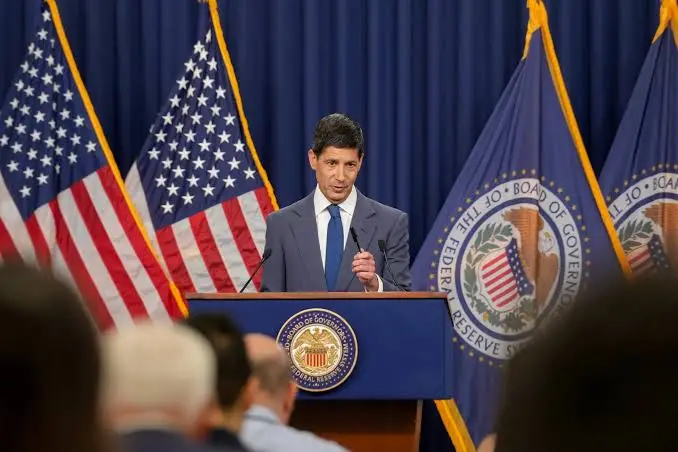
Chairman of the Federal Reserve Kevin Warsh during a news conference following a Federal Open Market Committee meeting in Washington on July 29. Photographer: Al Drago/Bloomberg
The Federal Reserve held the federal funds target range at 3.75% to 4.00% on October 28, 2026. The vote was 10-2, with two policymakers preferring another quarter-point increase.
For consumers, the decision means no new Fed increase was added this month. It does not mean rates were cut. Credit-card APRs, HELOC rates, auto financing, and mortgage rates can remain expensive. Savings accounts and newly issued CDs may continue offering relatively attractive yields, though banks set their own rates.
Key takeaways
• The Fed held its target range at 3.75% to 4.00%.
• The vote was 10-2; two members preferred a 0.25 percentage point increase.
• The decision was a hold, not a rate cut.
• Existing fixed-rate mortgages and fixed-rate auto loans do not change because of this meeting.
• Variable credit cards and HELOCs do not receive automatic relief from a hold.
• Savings and CD rates may remain elevated, but banks are not required to match the Fed.
• The Fed said economic activity was strong and inflation remained elevated.
• The next scheduled meeting is December 8-9, 2026.
What did the Federal Reserve decide on October 28?
The Federal Open Market Committee maintained the federal funds target range at 3.75% to 4.00%.
The Committee said economic activity was expanding at a strong pace, domestic spending had been resilient, job gains had kept pace with the workforce, and inflation remained elevated. It said more information would help determine the policy stance needed to return inflation to the 2% objective.
The 10-2 vote was not unanimous. Governor Lisa D. Cook and Cleveland Fed President Beth M. Hammack preferred raising the target by another quarter point.
That disagreement matters because it shows the debate is not simply about when rates will fall. Some policymakers still see a case for tighter policy.
What does a Fed pause mean after September’s rate hike?
The Fed increased the target range by 0.25 percentage point in September and then held it steady in October.
A pause means the committee did not change the benchmark at this meeting. It does not reverse September’s increase, lower the prime rate, or promise that the next move will be down.
Think of the decision as pressing pause on a staircase. The Fed did not climb another step, but it did not walk back down either.
Federal funds rate today versus consumer interest rates
The federal funds rate concerns overnight lending between financial institutions. Consumers do not borrow directly at that rate.
It influences other rates through bank funding costs, the prime rate, market expectations, and competition. Different financial products respond at different speeds.
| Financial product | Relationship to the Fed | Immediate effect of October hold |
|---|---|---|
| Variable credit card | Often tied to prime plus a margin | No new Fed-driven increase this month; APR remains high unless the issuer changes it |
| HELOC | Commonly variable and tied to prime | No new benchmark increase; existing rate remains subject to contract terms |
| Fixed-rate mortgage | Driven more by longer-term bond markets | No automatic change |
| Adjustable-rate mortgage | Changes according to its index and reset schedule | No instant change unless a scheduled reset uses a different index value |
| Fixed auto or personal loan | Rate locked in the contract | Existing rate does not change |
| New auto or personal loan | Influenced by market rates and borrower risk | Borrowing can remain expensive |
| Savings account | Bank-controlled deposit rate | No automatic cut or increase |
| New CD | Bank pricing reflects market conditions and competition | Yields may remain attractive but can change at any time before opening |
How the Fed rate hold affects credit card APRs
Most credit cards use variable APRs. A common structure is an index, often the prime rate, plus a fixed margin.
Because the Fed held rates steady, there is no additional quarter-point increase caused by this meeting. That does not make a 20%, 25%, or 30% APR inexpensive.
A cardholder carrying a balance should focus less on predicting the December meeting and more on reducing the principal.
Credit card interest example after a Fed hold
Suppose a card carries a $6,000 balance at 24% APR. If the balance remained unchanged for a year, a rough simple-interest estimate would be $1,440. Actual card interest is commonly calculated daily and changes as purchases and payments post.
The October hold prevents a new benchmark increase now, but the existing cost remains the main problem.
Urban Nest Guide’s credit card APR guide explains daily periodic rates, grace periods, statement balances, and minimum payments.
What a future quarter-point hike could cost cardholders
If a variable rate rose by 0.25 percentage point and the balance stayed unchanged:
| Balance | Rough added annual interest | Rough monthly average |
|---|---|---|
| $5,000 | $12.50 | $1.04 |
| $10,000 | $25.00 | $2.08 |
| $20,000 | $50.00 | $4.17 |
These figures isolate only the quarter-point change. They do not show the much larger cost of the existing APR.
How the Fed decision affects HELOC rates and home equity borrowing
Home equity lines of credit often carry variable rates tied to prime. A hold means the Fed did not create another immediate upward move in the policy range.
Borrowers should still check:
- Current APR
- Index and margin
- Rate-adjustment frequency
- Minimum payment formula
- Interest-only period
- Draw period and repayment period
- Rate cap and floor
- Annual or maintenance fees
HELOC payment example if rates rise later
A future 0.25 percentage point increase on a $50,000 balance equals about $125 more annual interest if the balance remains unchanged, or roughly $10.42 per month.
That is not a payment quote. HELOC payments depend on the agreement, balance changes, and whether the loan is in a draw or repayment period.
Should homeowners pay down a variable HELOC now?
Paying extra can reduce future interest, but do not drain essential emergency savings. Compare the HELOC rate with other debt, check for prepayment rules, and keep cash for urgent home repairs.
What the Fed pause means for mortgage rates
The Fed does not set the 30-year mortgage rate.
Fixed mortgage pricing is influenced by longer-term Treasury yields, inflation expectations, mortgage-backed security demand, economic growth, and lender pricing. Markets can move before or after a Fed meeting based on expectations.
Freddie Mac reported that the 30-year fixed average was 7.32% as of October 22, 2026, while the 15-year average was 6.68%. A newer weekly reading may be released after this article is drafted.
Editor update box for the October 29 mortgage rate
Before publishing, check Freddie Mac’s PMMS after its scheduled Thursday release. If the October 29 number is available, add it here and update the modified time.
Do not replace the Fed target rate with a mortgage rate or imply that the two are the same.
Existing fixed-rate mortgage after a Fed hold
An existing fixed-rate mortgage keeps the rate written in the contract. The Fed’s decision does not rewrite it.
The total housing payment can still change because of property taxes, homeowners insurance, mortgage insurance, or escrow adjustments.
New mortgage shopping after the Fed meeting
Homebuyers should request several same-day loan estimates and compare:
- Interest rate
- APR
- Discount points
- Origination charges
- Cash to close
- Mortgage insurance
- Lock period
- Monthly principal and interest
- Full payment including taxes and insurance
Urban Nest Guide’s current mortgage-rates article includes payment comparisons, while the first-time homebuyer guide covers the larger purchase decision.
What the Fed hold means for high-yield savings and CDs
A Fed hold can help keep short-term rates elevated, but it does not guarantee that a bank will preserve a particular APY.
Banks change deposit rates based on funding needs, competition, market expectations, and business strategy. Some cut rates before the Fed. Others wait. Some barely move at all.
Savings account action checklist after the Fed meeting
Check:
- Current APY
- Monthly fee
- Minimum balance
- Deposit insurance
- Transfer time
- Withdrawal access
- Rate tiers or promotional requirements
A high advertised APY is not helpful when a monthly fee consumes the interest.
Savings interest example at different APYs
Assuming the APY remained unchanged for a full year and ignoring taxes:
| Balance | At 0.50% APY | At 3.50% APY | At 4.00% APY |
|---|---|---|---|
| $5,000 | About $25 | About $175 | About $200 |
| $10,000 | About $50 | About $350 | About $400 |
| $25,000 | About $125 | About $875 | About $1,000 |
Actual interest depends on compounding, balance changes, and rate changes.
Use an FDIC-insured bank or federally insured credit union and confirm coverage. Urban Nest Guide’s high-yield savings guide explains APY and account comparisons.
CD strategy while the Fed holds rates
A CD locks a rate for a term, but it also limits access. Compare:
- APY
- Maturity date
- Early-withdrawal penalty
- Automatic renewal
- Grace period after maturity
- Deposit insurance
- Whether part of the emergency fund must remain liquid
The CD versus high-yield savings comparison can help readers decide.
What the Fed decision means for auto loans and personal loans
Existing fixed-rate loans do not change because of the meeting. New-loan pricing can remain high because lenders consider market rates, credit, term, collateral, loan size, and risk.
Auto loan shopping after the October Fed decision
Before visiting a dealership:
- Check credit reports
- Request outside financing quotes
- Compare APR, not payment alone
- Avoid stretching the term merely to make the payment look smaller
- Calculate total interest
- Separate the vehicle price from financing negotiations
Personal loans after the Fed rate hold
A fixed-rate consolidation loan can simplify payments, but it only helps when the APR and fees are lower and the borrower stops adding new card debt.
Compare the total cost, not just the advertised rate.
Four money moves after the Fed holds rates steady
1. Prioritize expensive variable-rate debt
A hold offers no automatic relief. Follow a structured payoff plan and make every minimum on time. Urban Nest Guide’s debt payoff guide can help organize the balances.
2. Compare savings yields without chasing every promotion
Move idle emergency savings when the improvement is meaningful, the account is insured, and access remains appropriate.
3. Recalculate any major purchase at today’s available rate
Do not base a house, vehicle, or renovation plan on an assumed future cut.
4. Read variable-rate agreements before the next Fed meeting
Know which debts can change, the index they follow, and when the next adjustment occurs.
What happens at the December 2026 Fed meeting?
The next scheduled FOMC meeting is December 8-9, 2026. It is associated with updated economic projections.
The October statement did not promise a hike, cut, or hold. The Committee said future policy would depend on additional information and the effort to return inflation to 2%.
A responsible article should not describe a market probability as a guaranteed decision.
FAQs
Did the Fed raise interest rates in October 2026?
No. The Fed held the target range at 3.75% to 4.00% on October 28.
Did the Federal Reserve cut rates?
No. Holding the range unchanged is not a rate cut.
Will credit card rates go down after the Fed pause?
Not automatically. Variable APRs can remain where they are, and issuers set rates according to card agreements.
Will my fixed mortgage payment change?
The interest rate on an existing fixed mortgage does not change because of the Fed meeting. Taxes, insurance, and escrow can still change the total payment.
Does the Fed control mortgage rates?
No. Mortgage rates are influenced more directly by longer-term bond markets and mortgage-backed securities, though Fed policy affects broader conditions.
Will savings account rates stay high?
They may remain competitive, but banks can change APYs independently. Compare current rates and terms.
Does a Fed hold help HELOC borrowers?
It prevents a new Fed increase at this meeting, but existing HELOC rates remain variable and can still be high.
When is the next Fed meeting?
The next scheduled meeting is December 8-9, 2026.
Disclaimer: This article is for general educational and news purposes. It is not individualized financial, banking, credit, lending, mortgage, tax, or investment advice.
About The Author