
 Akash Kumar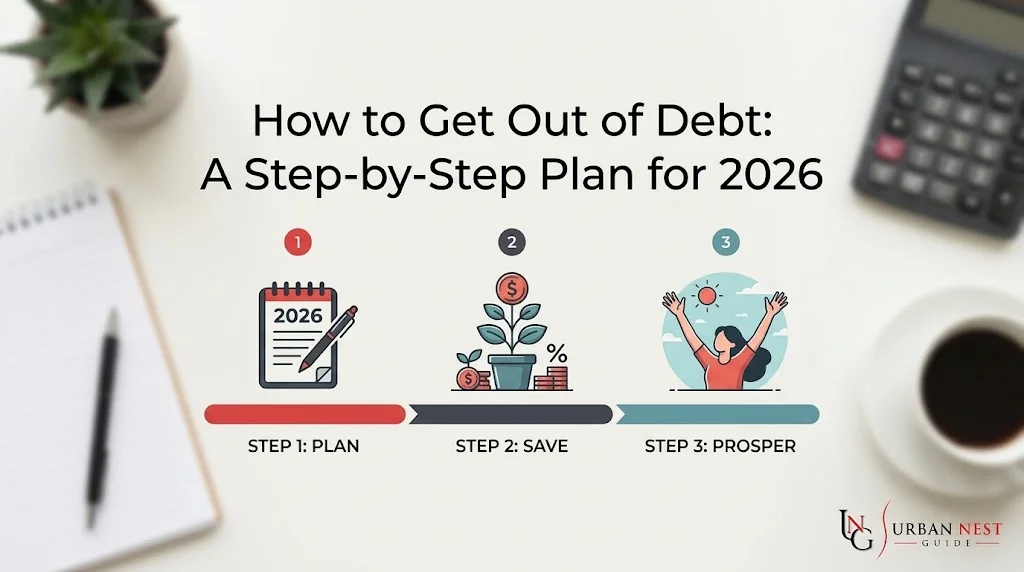
If debt has you feeling stuck, you are far from alone. The average American household carries around $11,153 in credit card debt, and total US credit card balances have climbed past $1.35 trillion.
But here is the encouraging part: with a clear plan and a little patience, you can absolutely dig your way out. This guide lays out a simple, step-by-step path to becoming debt-free: no gimmicks, no shame, just a plan that works.
Key Takeaways
Step 1: Face the Full Picture
The first step is often the scariest, but it is also the most powerful: write down every single debt you owe. List the balance, the interest rate (APR), and the minimum monthly payment for each one. Credit cards, car loans, student loans, personal loans, and any money owed to family; put it all on one page. Seeing the total in black and white takes away its power to lurk in the back of your mind, and it gives you a clear map to work from.
Step 2: Build a Small Safety Net First
Before you throw every spare dollar at your debt, set aside a small starter emergency fund, around $500 to $1,000. This may feel backwards, but it is essential. Without a cushion, the next unexpected car repair or medical bill goes straight back onto a credit card, and you end up running in place. A small safety net breaks that cycle so your progress actually sticks.
Step 3: Choose Your Payoff Method
Now for the strategy. There are two proven methods, and both work. The right one is the one you will actually stick with. We compare them in depth in our guide on the debt snowball versus debt avalanche, but here is the quick version.
| Method | How it works | Best for |
| Debt Snowball | Pay off the smallest balance first | Staying motivated with quick wins |
| Debt Avalanche | Pay off the highest interest rate first | Saving the most money on interest |
With either method, you pay the minimum on every debt, then throw all your extra money at one target debt until it is gone. Then you roll that freed-up payment onto the next debt, which is why the snowball builds such powerful momentum. Pick the approach that keeps you going; motivation is worth more than a few dollars of saved interest if it keeps you on track.
Step 4: Free Up More Money to Attack Debt
The faster you can throw money at your debt, the sooner you are free. Two levers help here. First, cut expenses using a budget so more of your income goes toward payments; the 50/30/20 rule is a simple starting point. Second, boost your income. Even a small side hustle can dramatically speed up your payoff; our list of passive and side income ideas is a good place to find one that fits you.
Step 5: Consider Consolidation (Carefully)
If you have several high interest debts, consolidating them into one lower-interest loan or a 0% balance transfer card can save money and simplify your life. But use these tools carefully. A balance transfer only helps if you pay it off before the promotional rate ends, and consolidation only works if you stop adding new debt. The tool does not fix the habit; your plan does.
For free, unbiased help, including how to spot debt-relief scams, the Consumer Financial Protection Bureau is an excellent resource. Be very cautious of any company that promises to erase your debt for a large upfront fee.
Step 6: Protect Your Credit Along the Way
As you pay down balances, something nice happens: your credit score usually improves, because a big factor is how much of your available credit you are using. Lower balances mean lower credit utilization, which lifts your score. A better score then unlocks lower rates on future loans, saving you even more. It is a positive cycle that rewards your hard work.
A Real Example: Paying Off $10,000 in Debt
Numbers make this feel possible, so let us walk through a realistic example. Say you owe $10,000 across two credit cards at an average 21% interest rate, with minimum payments of about $250 a month. If you only pay the minimums, it could take well over a decade to clear, and you would pay thousands in interest along the way. That is the trap minimum payments are designed to keep you in.
Now imagine you free up an extra $300 a month by trimming expenses and adding a small side income, so you pay $550 a month total. Suddenly that same debt is gone in under two years, and you save a large chunk of interest. The lesson is powerful: it is not the size of the debt that keeps people stuck, it is paying only the minimum. Every extra dollar you throw at the balance shortens the timeline dramatically.
| Monthly payment | Time to pay off $10,000 at 21% | Rough interest paid |
| $250 (minimum only) | about 5+ years, growing | several thousand dollars |
| $400 | about 2.5 years | much less interest |
| $550 | under 2 years | the least interest |
How to Stay Motivated on a Long Payoff Journey
Paying off debt is a marathon, and motivation is the fuel that gets you to the finish line. A few simple tactics help enormously. Track your progress visually, with a chart you color in or an app that shows the balance dropping; watching the number fall is genuinely satisfying and keeps you going. Celebrate small milestones, like clearing your first card, with a low-cost reward. And find community, whether a friend on the same journey or an online group, because accountability makes a real difference.
Most importantly, be kind to yourself. You will have setbacks, an unexpected bill, a month where you slip. That is normal and it does not erase your progress. What matters is getting back on the plan the next day. Every single payment, no matter how small, is a step toward freedom.
Understanding Good Debt vs Bad Debt
Not all debt is created equal, and knowing the difference helps you decide what to attack first. Bad debt is high-interest debt used for things that lose value or get consumed, like credit card balances, payday loans, and financing for gadgets. This is the debt that quietly drains your future, and it should be your top priority to eliminate. Good debt, on the other hand, is lower-interest debt that helps you build wealth or income over time, like a reasonable mortgage or, in some cases, student loans.
This does not mean good debt is free money; it still needs to be managed. But it does mean you should not panic about a 4% mortgage the same way you panic about a 24% credit card. When you build your payoff plan, put the expensive, wealth-draining debt at the front of the line, and treat low-interest good debt as a slower, steadier payoff while you also save and invest.
How to Stay Debt-Free After You Pay It Off
- Keep your emergency fund growing so surprises never send you back into debt.
- Use credit cards only for what you can pay off in full each month.
- Stick to your budget so your spending stays below your income.
- Redirect old debt payments into savings and investing once the debt is gone.
FAQs
What is the fastest way to get out of debt?
The fastest way is to combine a payoff method (snowball or avalanche) with freeing up more money by cutting expenses and adding income, then throwing every extra dollar at one debt at a time. Avoiding new debt while you do this is essential.
Should I save money or pay off debt first?
Do a bit of both. Build a small starter emergency fund of around $500 to $1,000 first, so surprises do not create new debt, then focus aggressively on paying off high interest debt while keeping minimum payments on everything else.
Is the debt snowball or debt avalanche better?
The avalanche saves the most money because it targets the highest interest rate first. The snowball is more motivating because it knocks out small balances quickly. The best method is the one you will actually stick with until the end.
Will paying off debt improve my credit score?
Yes, usually. Paying down credit card balances lowers your credit utilization, which is a major factor in your score. Making consistent, on-time payments also builds a positive history that raises your score over time.
Trusted resources: Consumer Financial Protection Bureau.
Disclaimer: This article is for general education, not financial or credit advice. For help with serious debt, consider a nonprofit credit counseling agency.
About The Author


1 thought on “How to Get Out of Debt: A Step-by-Step Plan for 2026”