
 Akash Kumar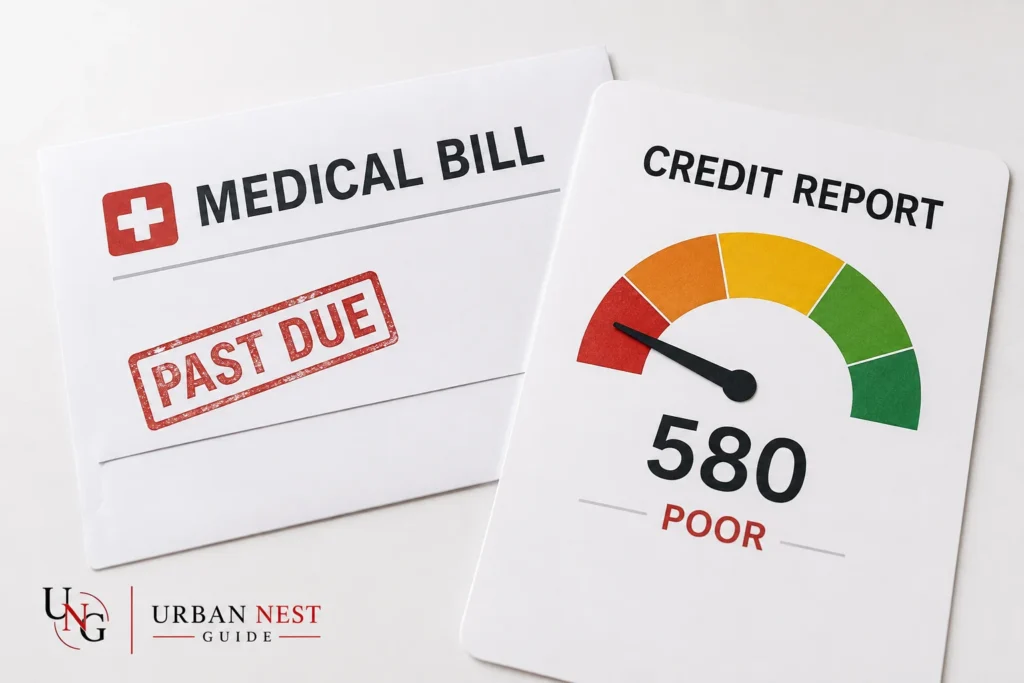
In January 2025, the federal government tried to ban medical debt from credit reports.
For good. No exceptions.
Millions of people breathed a sigh of relief.
Then, six months later, a federal court threw the whole rule out.
Just like that, the ban was gone.
So if you’ve spent the last year assuming “medical debt doesn’t count anymore”…
You’re about to find out that’s not quite true.
Here’s the real story. What actually changed. What didn’t. And exactly what to do if you’ve got a medical bill sitting in collections right now.
Quick Answer
Yes, medical debt can still show up on your credit report in 2026. But there’s good news too: three real protections are still in place, and they cover more situations than you’d think.
Let’s break it down.
What Actually Happened (The 60-Second Version)
Here’s the timeline, stripped of all the noise.
January 2025: The CFPB finalizes a rule. It would remove all medical debt from credit reports. No exceptions.
July 2025: A federal court vacates the rule. Reason? The CFPB exceeded its legal authority under the Fair Credit Reporting Act.
Today, 2026: No federal ban exists. Medical debt can legally appear on your credit report again.
That’s it. That’s the whole story everyone’s confused about.
But Here’s the Part Most Articles Skip
The federal ban is gone. Fine.
But the credit bureaus, Equifax, Experian, and TransUnion, made their own voluntary changes back in 2022 and 2023.
Those changes are still active.
The court case never touched them.
Here’s what’s actually protected right now:
- Paid medical debt. If you paid it off, it’s supposed to disappear from your report completely.
- Small medical debt. Anything under $500 doesn’t get reported at all, paid or not.
- New medical debt. You get a full 365-day grace period before it can even be reported.
Three real, working protections. Not bad for a rule that technically doesn’t exist anymore.
📌 Real Example: Meet Danielle
Danielle went to the ER in March 2026. Out-of-network doctor. Surprise bill: $2,100.
She can’t pay it all at once. But here’s the thing: because it’s under the 365-day mark, it’s not reportable yet.
That gives her a full year to dispute the bill, apply for hospital financial assistance, or negotiate a payment plan.
If she resolves it before the 365-day mark? It may never touch her credit report at all.
That’s the kind of detail nobody explains. Now you know it.
Wait, There’s a Fourth Protection Too
Even when medical debt does show up on your report, it might not hurt as much as you’d think.
Here’s why:
Newer credit scoring models, FICO 9, FICO 10, and VantageScore 4.0, weight medical debt less heavily than other collections. Some exclude it from the calculation almost entirely.
The catch?
Not every lender uses these newer models yet. Some still use older versions where medical debt hits just as hard as any other collection.
The takeaway: which score your lender pulls actually matters here.
Does Your State Give You Extra Protection?
Maybe. About 15 states have passed their own medical debt credit reporting laws.
Some of these go further than the federal bureau policy, banning medical debt from credit reports entirely within that state.
But here’s the twist:
These state laws are being challenged in court right now, on the argument that federal law preempts state regulation of credit reporting.
Translation: even state-level protection isn’t 100% settled either.
Bottom line: check your specific state’s current rule. Don’t assume national policy applies to you.
5 Myths About Medical Debt (Busted)
A lot of bad information is floating around about this topic. Let’s clear it up, one myth at a time.
Myth #1: “Medical debt can never appear on my credit report anymore.”
Reality: It can. The federal ban was struck down. This is the single biggest misconception out there right now.
Myth #2: “Any medical debt under $500 will hurt my score.”
Reality: Under current bureau policy, it’s excluded from your report entirely. It shouldn’t even show up.
Myth #3: “Paying off medical debt does nothing for my credit.”
Reality: Paid medical collections are removed completely under current policy. This is actually one of the few debt types where paying it off wipes the record clean.
Myth #4: “This is all settled now and won’t change again.”
Reality: Between the vacated federal rule and ongoing state-level legal battles, this is genuinely still in motion. Bookmark this page and check back.
Myth #5: “Insurance means I won’t end up with medical debt.”
Reality: Out-of-network charges, deductibles, copays, and denied claims routinely create real medical debt, even for people with good insurance.
📌 Real Example: Meet Marcus
Marcus has a $1,800 medical bill. It’s 14 months old. Already sold to a collections agency.
It’s past the 365-day window, so the new-debt protection doesn’t apply. And since it’s over $500, the small-debt exclusion doesn’t help either.
So what does Marcus actually do?
First, he requests an itemized bill. Turns out he was double-charged for a lab test. That error alone knocks $340 off the total.
Then he negotiates the rest. Collections agencies often buy medical debt for a fraction of face value, so he offers 50 cents on the dollar, in writing, with removal from his credit report as a condition of payment.
The agency accepts. Marcus pays $730. The account gets marked “paid and deleted.”
Total savings versus paying the original bill in full: over $1,000.
What To Actually Do If You Have Medical Debt Right Now
Here’s your action plan, step by step:
- Get an itemized bill. Not the summary. The full, line-by-line breakdown. Billing errors are shockingly common.
- Check it against what you remember receiving. Duplicate charges. Phantom procedures. It happens more than you’d think.
- Ask about financial assistance before it goes to collections. Most hospitals have a charity care program. Most patients never ask.
- If it’s already in collections, negotiate. Offer a lump-sum settlement. Get any deal in writing, including removal from your credit report.
- Track the 365-day clock. If your debt is new, you may have up to a year to resolve it before it ever touches your report.
None of these steps are complicated. But almost nobody does all five. That’s exactly why they work.
The Quick-Reference Table
Bookmark this. It’s the whole article in one glance.
| Situation | What Actually Happens |
| Medical debt, paid off | Removed from your credit report entirely |
| Medical debt under $500 | Doesn’t get reported, paid or not |
| New medical debt (under 365 days old) | Not reportable yet |
| Medical debt on FICO 9 / FICO 10 / VantageScore 4.0 | Weighted less, sometimes excluded |
| Medical debt in your state (1 of ~15 protected states) | May have extra protection, check locally |
FAQs
Is medical debt banned from credit reports in 2026?
No. A rule that would have banned it federally was struck down by a court in 2025. What applies now are voluntary bureau protections, not a full ban.
Does paying off medical debt improve my credit score?
Yes. Under current policy, paid medical collections are removed from your credit report entirely, which can meaningfully help your score.
How long before medical debt shows up on my credit report?
Under current bureau policy, new medical debt has a 365-day waiting period before it can be reported at all.
Does medical debt under $500 hurt my credit?
No, under current bureau policy, it’s excluded from your report entirely, regardless of whether it’s paid.
Can my state protect me even if federal rules changed?
Possibly. About 15 states have their own protections, though several face ongoing legal challenges.
Will the federal medical debt rule come back?
It’s possible through new rulemaking or legislation, but as of 2026, there’s no active federal rule in effect.
The Bottom Line
Medical debt can still show up on your credit report in 2026. The federal ban never actually took effect.
But you’re not defenseless. Paid debt gets removed. Small debt under $500 never gets reported. New debt gets a 365-day head start.
Use that time. Dispute errors. Ask about financial assistance. Negotiate before it reaches collections.
That’s not luck. That’s just knowing the rules better than most people do.
Sources Cited: Consumer Financial Protection Bureau, medical debt and credit reports. Federal Trade Commission, consumer rights around debt collection
Disclaimer: This article is for general education, not financial advice.
About The Author