
 Akash Kumar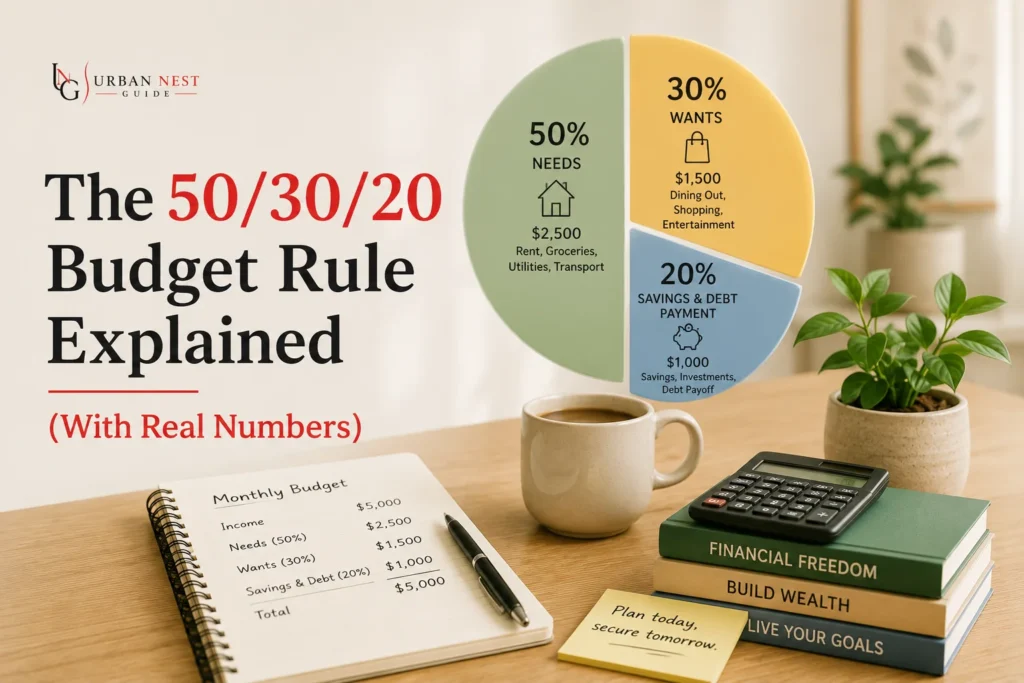
Ever get to day 20 of the month and quietly wonder where your entire paycheck went?
You’re not alone, and you don’t need a complicated spreadsheet or a finance degree to fix it. You need one simple rule that splits your paycheck into three buckets the moment it lands so every dollar has a job before your motivation to “be good with money” wears off.
Quick Answer
The 50/30/20 rule is a budgeting method that divides your after-tax income into three categories: 50% for needs, 30% for wants, and 20% for savings and debt repayment. It was popularized by Senator Elizabeth Warren and her daughter, Amelia Warren Tyagi, in their 2005 book… All Your Worth: The Ultimate Lifetime Money Plan.
Let’s break down exactly how it works, with two full worked examples using real numbers, plus what to do if the standard percentages simply don’t fit your city or your income.
Where the 50/30/20 Rule Actually Comes From
This isn’t a random internet budgeting trend. The rule was introduced by Elizabeth Warren, then a Harvard Law School professor and now a U.S. Senator, and her daughter Amelia Warren Tyagi in their book…..All Your Worth: The Ultimate Lifetime Money Plan.
Their goal wasn’t to create the mathematically perfect budget for every household. It was to create a budget simple enough that ordinary working families would actually stick to it without needing to track twenty different spending categories down to the penny, which is exactly why it’s still one of the most recommended starting points for beginners two decades later.
Warren’s broader argument in the book was that many American families were, even then, stretched thin by rising fixed costs, a theme that, as we’ll see later in this post, has only intensified since the book’s original publication.
How the 50/30/20 Rule Works
You start with your after-tax income, what actually lands in your bank account, not your gross salary before taxes and deductions. Then you split it three ways.
50% — Needs
These are the expenses you genuinely can’t avoid without real consequences. If you skip one, something breaks; you lose housing, your utilities get shut off, or you default on an obligation.
- Rent or mortgage payment
- Utilities (electricity, water, basic internet)
- Groceries (not takeout)
- Minimum debt payments
- Insurance premiums
- Basic transportation (car payment, gas, or transit pass)
Notice what’s not on this list: the premium cable package, the $200 grocery delivery habit, or the car payment on a vehicle well beyond what basic transportation requires. Needs are about function, not comfort level.
30% — Wants
Everything that makes life enjoyable but isn’t strictly necessary for survival or your basic obligations.
- Dining out and takeout
- Streaming subscriptions
- Shopping beyond basic necessities
- Hobbies, entertainment, travel
This bucket exists on purpose. A budget with zero “wants” tends to fail within a few months, because most people simply won’t stick to a plan that feels like constant deprivation. The 30% is there specifically to make the whole system sustainable.
20% — Savings & Debt Paydown
The bucket that builds your future: emergency savings, retirement contributions, investing, and any extra (above the minimum) payments toward debt.
Warren’s own guidance, notably, was to direct this bucket first toward high-interest debt; she argued that the guaranteed “return” of eliminating a 20%+ interest credit card balance usually beats the uncertain returns of early investing, a point that still holds up well today.
One nuance worth flagging: if your employer offers a 401(k) match, contribute enough to capture the full match before aggressively attacking debt below about 6–7% interest. A full employer match is an immediate, guaranteed return that’s hard to beat with any other move in your budget.
A Real Example: Budgeting $4,000 a Month
Let’s put real numbers on it. Say you bring home $4,000 a month after taxes. Here’s how the 50/30/20 split looks:
| Category | Percentage | Monthly Amount | Examples |
| Needs | 50% | $2,000 | Rent, utilities, groceries, minimum debt payments |
| Wants | 30% | $1,200 | Dining out, streaming, shopping, hobbies |
| Savings/Debt | 20% | $800 | Emergency fund, retirement, extra debt payments |
That $800 a month, invested consistently, is the number that quietly builds long-term wealth, even though it’s the bucket most beginners think about last, after needs and wants have already claimed their share.
A Second Example: Budgeting $2,500 a Month
Now let’s look at a tighter budget: someone bringing home $2,500 a month, which is a realistic take-home pay for many entry-level jobs or part-time work.
| Category | Percentage | Monthly Amount | Examples |
|
Needs |
50% |
$1,250 |
Rent (often shared/roommate), utilities, groceries |
|
Wants |
30% |
$750 |
Modest dining out, one streaming service, occasional shopping |
|
Savings/Debt |
20% |
$500 |
Starter emergency fund, minimum extra debt payments |
At this income level, $1,250 for needs is genuinely tight in many U.S. cities, which is exactly why the next section on adjusting the rule matters so much for lower and moderate incomes.
What Is Personal Finance? A Beginner’s Guide (2026)
Learn the fundamentals of personal finance, including budgeting, saving, investing, debt management, and financial planning. This beginner-friendly guide explains the essential money skills you need to build long-term financial stability.
Needs vs. Wants: Where People Get Confused
This is where most people trip up. A few categories are genuinely ambiguous, and being honest with yourself here matters more than the exact percentages.
- A car payment for basic transportation is a need. A car payment on a vehicle well above what you can afford is partly a want.
- Basic groceries are a need. Daily $7 coffee runs and $40 grocery-delivery convenience fees are a want.
- A phone plan is generally a need in 2026. The newest phone upgrade every year is a want.
- Health insurance is a A premium gym membership is usually a want (unless prescribed for a medical reason).
- Minimum debt payments are a need; missing them damages your credit score. Extra payments above the minimum count toward your 20% savings/debt bucket instead.
There’s no perfect answer here; the goal is honesty, not a technicality you can win against yourself. If you’re constantly re-categorizing wants as needs to make the math work, that’s useful information about where your spending actually needs attention.
What If the Rule Doesn’t Fit Your Budget?
Here’s the honest caveat most budgeting articles skip: the 50/30/20 rule assumes needs only take up half your income. In many U.S. cities in 2026, that’s simply not realistic.
Why Housing Breaks the Math for Many People
While incomes have increased by roughly 77%, rents have surged about 129% since 1999. For renters in high-cost metro areas, essential housing expenses alone can consume 50–60% of take-home pay, making it difficult or even impossible to follow the traditional 50/30/20 budgeting rule.
If that’s your situation, don’t abandon the framework; adjust the percentages. A 60/25/15 or even 65/25/10 split is still a version of the same rule; the categories matter more than hitting the exact numbers 50, 30, and 20.
“A rule of thumb is meant to be an entry into the conversation and less an end-all, be-all of what we’re trying to achieve.”
— Elizabeth Pennington, Senior Associate, Fearless Finance (via Time)
In practice, that might look like this: if your needs genuinely run 60% of take-home pay, drop wants to 25% and savings to 15% temporarily while you work on the underlying problem, whether that’s negotiating rent, finding a roommate, or growing your income rather than pretending the standard percentages apply to a budget they don’t fit.
How the 50/30/20 Rule Compares to Other Budgeting Methods
The 50/30/20 rule isn’t the only option, and it’s worth knowing the alternatives so you can pick (or combine) what actually works for you.
| Method | How It Works | Best For |
| 50/30/20 Rule | Three broad percentage-based buckets | Beginners who want simplicity over precision |
|
Zero-Based Budget |
Every dollar assigned a specific job until income minus expenses equals zero | People who want maximum control and detail |
|
Envelope System |
Cash (or digital equivalents) divided into spending categories; spending stops when the envelope is empty | People who overspend on cards and need a hard stop |
|
Pay-Yourself-First |
Savings/investing is automated first; whatever’s left covers everything else | People who already have needs and wants under control and want to protect savings |
None of these are mutually exclusive. Many people use 50/30/20 as their overall framework, then layer in the envelope method for one specific category (like dining out) where they tend to overspend.
How to Set Up Your 50/30/20 Budget in 15 Minutes
- Calculate your monthly after-tax Use your actual take-home pay, including any side income you can count on consistently.
- List every “need” expense from the last 2 months of bank statements, and add them up.
- List every “want” expense the same way.
- Compare your real numbers to the 50/30/20 targets. Where’s the gap?
- Automate the 20%: set up an automatic transfer to savings or your retirement account on payday, before you have a chance to spend it.
- Revisit monthly for the first 3 months, then quarterly once it feels stable.
Budgeting Apps and Tools That Can Automate It
You don’t need a complicated system. Most people succeed with one of three approaches:
- A dedicated budgeting app (envelope-style or zero-based budgeting apps) that automatically categorizes your bank transactions.
- Your bank or credit union’s built-in spending insights, which many now offer for free.
- A simple spreadsheet, updated weekly, old-fashioned, but it works, and it costs nothing.
Whichever you choose, the goal is the same: know your numbers without needing to think hard about it every single day. The best budgeting system is the one you’ll actually keep using six months from now, not the one with the most features.
A Week in the Life: Applying 50/30/20 to Real Decisions
The percentages are easy to understand on paper. The real test is what they look like in the middle of an ordinary week, when a decision has to be made in the moment.
Meet Alex, who takes home $3,200 a month: $1,600 needs, $960 wants, $640 savings/debt. Here’s how that plays out over a single week.
- Monday: Alex’s rent and phone bill autodraft from the needs bucket, right on schedule. Nothing to decide here; it’s already automated.
- Wednesday: A coworker suggests lunch out. Alex checks the wants category in a budgeting app and sees $310 of the $960 monthly wants budget is already spent, with three weeks left in the month. Lunch happens, but it’s the $12 special, not the $22 entrée, a small, quick decision informed by an actual number, not a guess.
- Friday: A $180 car repair comes up. Because Alex has been treating the emergency fund as untouchable, this doesn’t turn into a moment of panic; it’s simply covered from savings, with a plan to replenish that specific amount over the next two paychecks.
- Sunday: Weekly 10-minute check-in: Needs are on track, wants are running slightly ahead of pace and savings took a one-time dip from the car repair. Alex trims one wants category (a food delivery order) the following week to stay on pace overall.
Nothing about this week required willpower in the moment that a general “try to spend less” intention couldn’t have provided. What it required was simply knowing the numbers, which is the entire point of the 50/30/20 framework in the first place.
Common Budgeting Mistakes That Break the 50/30/20 Rule
Even with a simple framework, a few habits quietly derail it for most beginners. Watch for these five.
- Budgeting off gross pay instead of take-home pay. Using your salary before taxes makes every category look more generous than it really is, and the plan falls apart the moment real bills hit your account.
- Forgetting irregular expenses. Car registration, annual subscriptions, and holiday gifts don’t show up every month, so they get left out of the budget entirely and then feel like a surprise “emergency” when they arrive.
- Lumping all debt into one category. A 22% APR credit card and a 6% student loan are not the same problem, and treating them identically in your budget can mean paying down the wrong balance first.
- Setting the wants category at zero. As covered above, this almost always backfires. A realistic wants number, even a small one, keeps the whole budget sustainable.
- Never adjusting for raises or rent increases. A budget built on last year’s numbers slowly drifts out of sync with reality, often without anyone noticing until the savings rate has quietly dropped.
How to Handle Windfalls and Irregular Income
The clean 50/30/20 split assumes one predictable paycheck. Real life is often messier: tax refunds, bonuses, freelance income, or commission-based pay that swings from month to month.
For One-Time Windfalls
A simple approach many planners recommend: split any windfall using the same 50/30/20 logic, but weighted more heavily toward savings and debt, since a windfall isn’t part of your baseline lifestyle. A common variation is 10% needs (catch up on anything behind), 20% wants (enjoy some of it guilt free), and 70% savings and debt paydown.
For Variable or Commission-Based Income
Calculate your percentages against your lowest reliable month from the past year, not your average or your best month. Treat any income above that baseline as a bonus to be split the same way as a windfall. This keeps your core needs covered even during your leanest months, which matters far more than optimizing during your best ones.
- The 50/30/20 rule divides your after-tax income into 50% for needs, 30% for wants, and 20% for savings and debt repayment.
- The budgeting method was popularized by Elizabeth Warren and Amelia Warren Tyagi in their 2005 book All Your Worth: The Ultimate Lifetime Money Plan.
- If you live in a high cost of living area, adjust the percentages to fit your reality (such as 60/25/15) instead of abandoning the budgeting framework altogether.
- Automate your savings by scheduling your 20% transfer on payday. This removes the need to rely on willpower each month.
- The categories matter more than the exact percentages. Build the habit of separating needs, wants, and savings first, then fine-tune the numbers as your financial situation changes.
FAQs
Q1. Is the 50/30/20 rule realistic in 2026?
For many people in average cost-of-living areas, yes. But in high-rent metro areas, needs can easily exceed 50% of income. In that case, adjust the ratios (like 60/25/15) rather than abandoning the framework entirely.
Q2. What if my rent alone is more than 50% of my income?
Adjust the percentages to reflect your real costs, for example, 65% needs, 25% wants, and 10% savings, while still keeping some amount, even if small, flowing toward savings and debt paydown every single month.
Q3. What’s a good budgeting app for beginners?
Look for an app that automatically syncs with your bank and categorizes spending, rather than requiring manual entry for every transaction, the biggest reason people quit budgeting apps is the manual effort involved.
Q4. Should extra debt payments count as “savings” or “wants”?
Extra payments above the minimum on any debt count toward the 20% savings and debt category, not wants. Only the required minimum payment belongs in the 50% needs category.
Q5. Can I use the 50/30/20 rule if my income varies month to month?
Yes, though it takes an extra step: calculate the percentages based on your average income over the last 3–6 months or use your lowest typical month as a baseline and treat any income above that as a bonus to split across the same three categories.
Q6. Should I budget gross income or take-home pay?
Always use take-home (after-tax) pay. Budgeting off your gross salary overstates what’s actually available and is one of the most common reasons a 50/30/20 budget feels like it “doesn’t work” within the first month.
Q7. What if I can’t hit 20% savings right now?
Start with whatever percentage is realistic, even if it’s 5% or 10%, and treat 20% as a target to grow into as your income rises or your expenses shift, rather than a bar you need to clear immediately to make budgeting worthwhile.
The 50/30/20 rule isn’t about hitting perfect numbers from month one. It’s a lens for seeing your money clearly enough to make better decisions, and that clarity alone, before a single percentage is perfectly dialed in, is usually the biggest shift most beginners experience.
Urban Nest Guide is an educational resource. Nothing in this article constitutes personalized financial, investment, tax, or legal advice, and it should not replace guidance from a licensed professional who understands your individual financial situation.
Any names, income figures, or dollar amounts mentioned are hypothetical examples provided solely for educational purposes. Interest rates, statistics, and other financial data reflect information available at the time of publication and may change without notice.
All financial decisions, including investing, cryptocurrency, borrowing, and credit management, carry risk, including the possible loss of principal. Past performance does not guarantee future results.
Best Practice: Before making a major financial decision, consult a Certified Financial Planner (CFP), Certified Public Accountant (CPA), or another qualified financial professional for advice tailored to your circumstances.
About The Author